
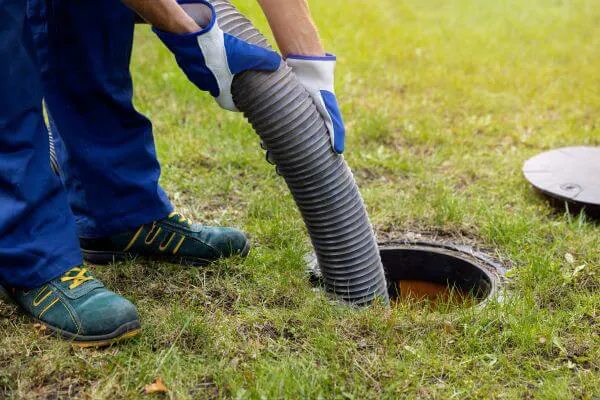
Bad odours in a septic tank are not just a nuisance: they usually warn that the system—or its maintenance—needs attention. The good news is that most cases can be resolved with a clear diagnosis and specific actions: emptying and cleaning when necessary, checking ventilation, checking siphons, and domestic habits that protect bacterial flora. In this guide, you will learn how to identify the source of the odour, which technical solutions really work, and which “natural” practices help without compromising the installation. If you need assistance, you can request a camera pipe inspection or schedule septic tank extraction.
Why does a septic tank smell: common causes
With daily use, solids settle at the bottom (sludge) and a crust of grease forms on the surface. If the useful capacity is reduced too much, fermentation increases and volatile compounds (sulphides, ammonia) are emitted, which we detect as a ‘sewage smell’. Added to this are factors that usually coincide when the problem arises:
-
Poor or poorly finished ventilation. The outlet must vent through the roof, freely and at the correct height. If there are obstructions or the outlet is poorly located, the gases will seek unwanted outlets (manholes, appliances).
-
Unclogged siphons. In rarely used rooms, the water in the trap evaporates; without a water seal, the gases return to the interior.
-
Damaged joints and covers. A cover without a seal or a cracked manhole cover can cause localised leaks in gardens or technical rooms.
-
Incorrect connections and counter-connections. Rainwater drains connected to the pit, sections with pockets of water or inverted slopes promote fermentation and excess pressure.
-
Aggressive chemicals. Concentrated bleach, caustic soda or solvents upset the bacterial balance and prolong odours.
-
Heavy rain. The sudden influx of water stirs up sludge, dilutes it and can cause overflowing if the covers do not close properly.
To better understand the water cycle and why gases are generated, we recommend this blog article: Where does the water from a septic tank go?
Step-by-step professional diagnosis
A systematic diagnosis avoids ‘patches’ and repetitions. This is the sequence we follow in the field:
1) History and symptoms. Note when the smell appears (mornings, after rain, when using the washing machine) and where (one bathroom, the entire house, outside). Listen for gurgling noises when flushing and check the drainage.
2) Priming siphons. Fill all traps (basins, showers, sinks and floor drains). If the odour diminishes, you have identified a clear source that can be quickly corrected.
3) Covers and manholes. Check for leaks: cracked seals? Deformed covers? Loose screws? Often, the ‘garden smell’ is caused by a main cover that does not seal properly. If there are complex access points or buried manholes, we locate them before opening with hidden manhole detection.
4) Network ventilation. Locate the outlet to the deck and check the height, finish and absence of obstructions. In extensive networks, it is advisable to consider auxiliary ventilation to stabilise pressures and prevent siphon suction.
5) Camera inspection. If doubts remain, the push or robotic camera shows blockages, sediment pockets, roots or breaks. With this report, we can make accurate decisions. You can request a camera pipe inspection.
6) Measurement of sludge and scum. If levels exceed the recommended threshold, emptying and cleaning are required. Schedule septic tank removal.
Technical solutions that work (and when to apply them)
Emptying and cleaning with tanker lorry
When there is sludge or crust saturation, a persistent odour, or too much time has passed since the last service, emptying with a tanker truck is the priority action. In addition to removing sludge and floating matter, we usually pressure wash pipes and manholes to remove adhered grease. After the operation, we check the flow rate and leave written recommendations. More details and schedule on the septic tank emptying page.
Pressure washing and interior milling
If the pipe network has a lot of grease, mineral deposits or root intrusion, high-pressure water restores the useful diameter. When there are very hard deposits or persistent roots, we resort to internal milling (where appropriate) and confirm the result with video. You can see the scope here: pipe milling. After cleaning, it is usually good practice to finish with a camera inspection.
Improved ventilation
Ventilation is the system's ‘safety valve’. It must vent through the roof, without any finishes that could cause re-entry near windows. In complex installations, well-calculated auxiliary ventilation prevents depressions that empty siphons. This adjustment, combined with proper sealing, immediately reduces indoor odours.
Sealing of covers and joints
Replacing aged seals and securing closures on covers and manholes stops diffuse leaks that are mistaken for ‘ground odours’. Important: sealing everything without proper ventilation only shifts the problem indoors; the key is to ventilate well and seal the leak.
Correction of countercurrents and pockets
If the camera shows sections with permanent blockages, we evaluate trenchless solutions (relining, packers) or, if this is not feasible, section-by-section work. A well-resolved specific defect eliminates chronic sources of odour. Find out about the options here: pipe repair without construction work.
Maintenance plan
Each installation requires regular maintenance depending on the volume of the tank, number of users, habits and historical behaviour. Recording dates, sludge levels and observations allows you to adjust the frequency and prevent emergencies. For communities and businesses, check out our pipe maintenance contracts.
Very strong odour or overflow outside of business hours? Contact the 24-hour drain cleaning service or request urgent assistance.
Natural methods and good everyday practices
Natural measures are no substitute for technical maintenance, but they do help to stabilise microbiology and reduce odours.
-
Responsible use of sanitation. Avoid wipes, sanitary towels, cotton buds, oils or kitchen waste. This is the number one antidote to blockages and fermentation. If you're interested in why, here we explain why pipes become blocked.
-
Chemicals: less is more. Choose detergents that are compatible with septic systems. Small doses of bleach are usually acceptable; continuous and concentrated use upsets the balance of the flora and can make the smell worse. This blog guide provides guidance on which products are safe for septic tanks (and which to avoid).
-
Always keep siphons primed. In rarely used bathrooms, set up a periodic priming programme. For long absences, a small plug of inert mineral oil in the siphon slows down evaporation (do not use edible oils).
-
Rainwater management. Do not connect rainwater downpipes to the septic tank. Sudden dilutions remove sludge and push gases into the manholes. Keep terrace drains clean to prevent overflows with a ‘septic tank smell’.
-
Biological additives, with discretion. If you use them, make sure they are specific for septic tanks and follow the dosage instructions. They can help stabilise the microflora, but they are never a substitute for emptying or pressure washing when there is saturation.
-
Ventilate the property. Open windows or use extractor fans to help dissipate residual odours while you correct the underlying cause.
-
Second homes. Before closing up for weeks, fill the siphons and run the water for a few seconds at each point. When you return, if there is a smell, start by priming the siphons, checking the covers and ventilating, before assuming there is a major fault.
Common mistakes that make the smell worse
-
Seal the pit ‘tightly’. Blocking all exits without resolving ventilation shifts the problem to the home. The solution: ventilate well and seal only what leaks (covers and joints).
-
Pouring chemicals to ‘kill the smell’. Caustic soda, solvents or strong bleaches may offer immediate relief, but they aggravate biological functioning and damage pipes. Result: chronic problems.
-
Postpone maintenance. If the sludge measurement indicates that it needs emptying and you postpone it, fermentation will increase and so will the risk of overflowing. It is more economical to empty it on time than to deal with an emergency. If you are unsure, check this guide: when is it time to empty the septic tank?
-
Blind breaking. Opening floors without locating manholes and without video inspection results in unnecessary work. First locate (if necessary, with hidden manhole detection) and diagnose with pipe inspection; then decide on the intervention (if appropriate, pipe repair without construction work).
Warning signs and when to seek help
-
Persistent odour despite priming siphons and ventilating.
-
Gurgling, very slow drainage or water backing up in toilets.
-
Odours that worsen when using the washing machine/dishwasher (possible depression due to insufficient ventilation).
-
Overflowing drains, dampness or stains in the area around the drain.
-
Doubts about the location of manholes or the internal condition of the installation.
If you recognise yourself in one or more of these points, request a technical assessment: we will guide you with sludge measurement, camera and, if necessary, tanker truck. Write to us using the contact form and, if it is outside of business hours, contact the 24-hour drain unblocking service.
Frequently asked questions (FAQ)
1) Does a bad smell always mean that the septic tank is full?
Not necessarily. It may also be due to poor ventilation, broken siphons, or leaks in joints. Even so, measure the sludge to decide whether it needs to be emptied. If necessary, schedule the removal of septic tanks.
2) How often should I empty the septic tank?
It depends on the volume of the tank, number of users and habits. Ideally, a frequency should be set and adjusted according to sludge measurements and historical data. For communities and businesses, our pipe maintenance contracts help to avoid emergencies.
3) Are biological additives effective?
They can help if they are specifically designed for septic tanks and are dosed correctly, but they are not a substitute for emptying or pressure washing when the tank is full. Before pouring anything in, confirm the diagnosis.
4) Why does it smell more in summer?
Heat accelerates decomposition and volatilises odorous compounds. Increase ventilation, check siphons and keep up with maintenance. Avoid aggressive products that destabilise the flora.
5) How can I prevent traps from drying out in rarely used bathrooms?
Bait them periodically and, if you anticipate long absences, add a small capful of inert mineral oil to the trap to reduce evaporation. Upon your return, rebait and ventilate.
6) What should I do if the smell appears after using the washing machine or dishwasher?
There is probably a blockage in the duct due to insufficient ventilation or grease build-up in the kitchen section. Request an inspection with a camera and,if necessary, a cleaning/milling.
7) Which authority can I consult for general recommendations?
For guidelines on good environmental practices at home, check the MITECO website: miteco.gob.es. If you live in the Valencian Community, you can also check useful resources and procedures on the Valencian Regional Government website: gva.es.
Do you require assistance now?
We can measure sludge, carry out camera inspections, perform cleaning/milling and propose repairs without construction work if necessary. Schedule your assessment via Contact. If it is an emergency, we offer 24-hour drain unblocking and urgent service.